Key Facts: Eritrea Wages
- Country
- Eritrea (ERI)
- Continent
- Africa
- Currency
- Eritrean Nakfa (ERN)
- Minimum Wage
- Nfk600 /mo ($40 USD)
- Average Gross Monthly Salary
- Nfk6,000 /month
- Average Gross Annual Salary
- Nfk72,000 /year
- Standard Work Week
- 44 hours
- Data Source
- ILO ILOSTAT / World Bank / OHCHR Eritrea reports
- Last Updated
- 2026-02-25
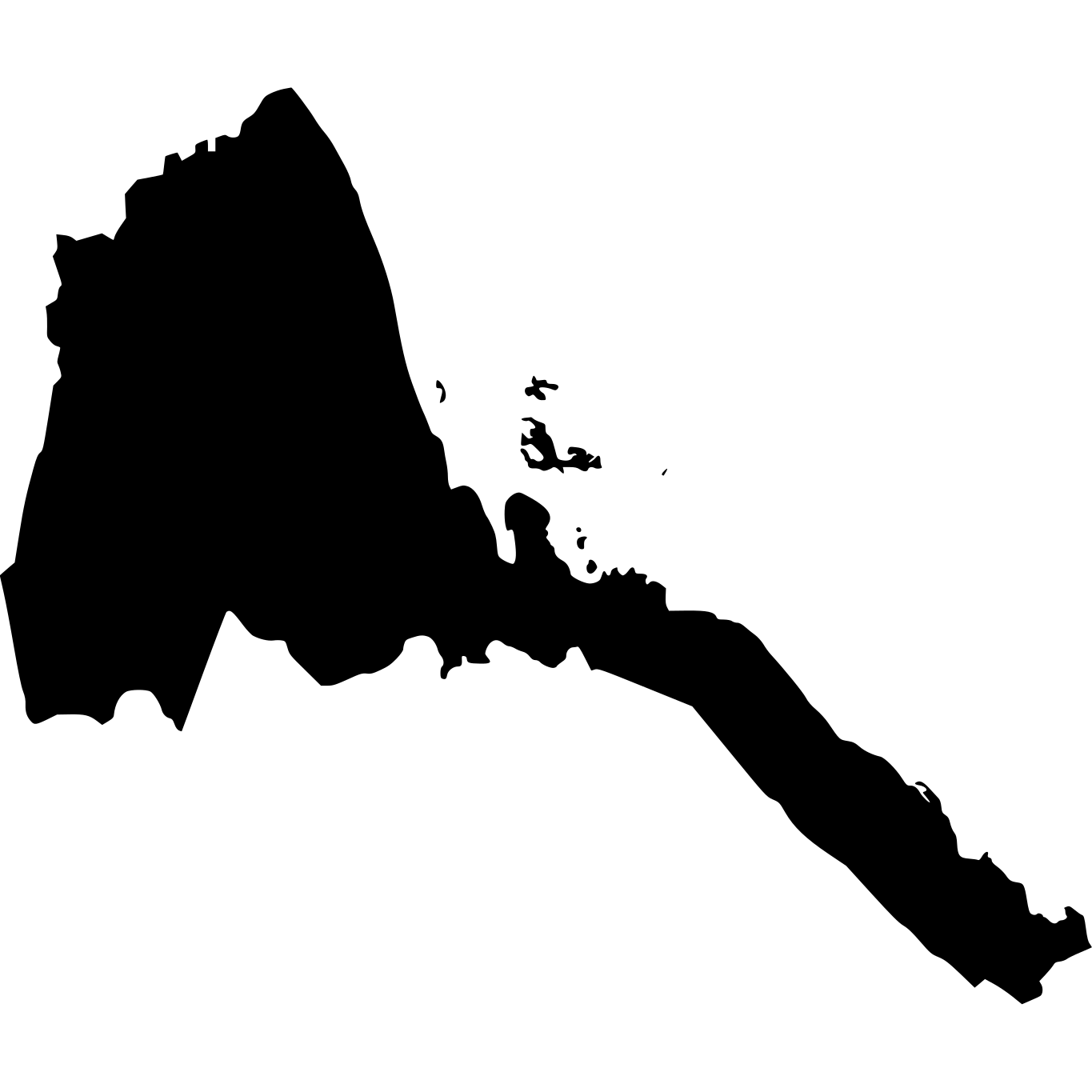
Eritrea — Average Salary & Wages
Eritrean Nakfa (ERN) Data verified Jan 2026 Sources
The average salary in Eritrea is
Nfk72,000 a year
After tax, take-home pay is about Nfk64,800 a year.
The minimum wage in Eritrea is Nfk600/mo ($40 USD) as of 2026. The average gross monthly salary is Nfk6,000 ($400 USD).
The Numbers
Eritrea's minimum wage is among the highest for Africa, ranking #16 out of 54 countries with statutory minimum wages. Over the past 6 years, the minimum wage has increased by 33% in nominal terms. The standard work week is 44 hours.
Estimated average for formal sector and government employees. At the official rate of ~15 ERN/USD, this equates to roughly USD 400/month. However, this figure is highly misleading — the majority of the working-age population is conscripted into indefinite national service, which pays approximately ERN 450–600/month (USD 30–40). The ERN is not freely convertible and parallel market rates diverge significantly from the official rate. Eritrea publishes almost no official economic statistics. Around 70% of the population relies on subsistence agriculture. Remittances from the large diaspora are a critical income source. Data should be treated with extreme caution.
Wage Breakdown
- Monthly
- Nfk600
Eritrea's labour law includes minimum wage provisions but reliable official data is not publicly available. The government controls all formal employment. The national service program — which can legally conscript citizens indefinitely — pays a monthly allowance reported at approximately ERN 450–600/month, well below any reasonable living wage. The official exchange rate of approximately 15 ERN/USD (as of available data) gives a USD equivalent of about USD 40/month, but parallel market rates diverge significantly. Many Eritreans have fled the country (one of the highest per-capita emigration rates in the world), and remittances are a major household income source. Data should be treated with extreme caution.
What It Buys
• PPP ADJUSTED
In Eritrea, the minimum wage has the purchasing power of $121.46/mo in the United States, adjusted for local cost of living using the World Bank PPP conversion factor.
In Context
At minimum wage, a full-time worker in Eritrea earns Nfk600/mo. That is 10% of the average gross salary.
- Monthly (full-time)
- Nfk600 at min. wage
- Share of avg. salary
- 10% gross, before tax
- USD equivalent
- $40/mo monthly
- Nominal growth
- +33% since 2018
How It Changed
Minimum Wage Trend
Since 2018, the minimum wage has grown +33% in nominal terms.
Where It Varies
Work Week
- Standard
- 44 hrs/wk
Labour Law sets 44 hours/week for civilian workers (8 hours/day, 5.5 days). However, the national service program operates under military regulations outside normal labour law. No reliable enforcement or monitoring data is available.
How It Compares
How Eritrea Compares
| Metric | Eritrea | Africa Avg. | Africa Highest |
|---|---|---|---|
| Avg. salary (USD equiv.) | $400/mo | $380.99/mo | $1,625/mo (Mauritania) |
• NEIGHBORING COUNTRIES
Compare Eritrea
 Nigeria
  Angola
  Central African Republic
  Djibouti
  United States
  United Kingdom
 Popular Comparisons
Nigeria Angola Central African Republic Djibouti  Ethiopia
  Guinea-Bissau
  Ivory Coast
  Morocco United States
  India
India  South Korea
  Switzerland
  Argentina
  Denmark
  Bangladesh
 More in Africa
 Algeria
  Benin
Benin  Botswana
  Burkina Faso
  Burundi
 Frequently Asked Questions
What is the minimum wage in Eritrea?
The minimum wage in Eritrea is Nfk600/mo (approximately $40 USD), effective since 2018-01-01. Eritrea's labour law includes minimum wage provisions but reliable official data is not publicly available. The government controls all formal employment. The national service program — which can legally conscript citizens indefinitely — pays a monthly allowance reported at approximately ERN 450–600/month, well below any reasonable living wage. The official exchange rate of approximately 15 ERN/USD (as of available data) gives a USD equivalent of about USD 40/month, but parallel market rates diverge significantly. Many Eritreans have fled the country (one of the highest per-capita emigration rates in the world), and remittances are a major household income source. Data should be treated with extreme caution.
What is the average salary in Eritrea?
The average gross monthly salary in Eritrea is Nfk6,000 (approximately $400 USD). Estimated average for formal sector and government employees. At the official rate of ~15 ERN/USD, this equates to roughly USD 400/month. However, this figure is highly misleading — the majority of the working-age population is conscripted into indefinite national service, which pays approximately ERN 450–600/month (USD 30–40). The ERN is not freely convertible and parallel market rates diverge significantly from the official rate. Eritrea publishes almost no official economic statistics. Around 70% of the population relies on subsistence agriculture. Remittances from the large diaspora are a critical income source. Data should be treated with extreme caution. Source: ILO / Salary Explorer / diaspora community reports (2024).
How many hours is the standard work week in Eritrea?
The standard work week in Eritrea is 44 hours. Labour Law sets 44 hours/week for civilian workers (8 hours/day, 5.5 days). However, the national service program operates under military regulations outside normal labour law. No reliable enforcement or monitoring data is available.
How has the minimum wage in Eritrea changed over time?
The minimum wage in Eritrea has changed as follows: Nfk450 in 2018, Nfk600 in 2021, Nfk600 in 2024. This represents 3 recorded adjustments.
What is the minimum wage in Eritrea in USD?
The minimum wage in Eritrea converts to approximately $40/mo in US dollars, based on current exchange rates. Actual purchasing power may differ due to local cost of living.
What is the average salary in Eritrea in USD?
The average gross monthly salary in Eritrea is approximately $400 per month in US dollars, based on current exchange rates. Actual purchasing power may differ due to local cost of living.
From Insights
All Insights →In-depth wage analysis and data stories from wage.is Insights.